
1989
video – Taonga source: Television New Zealand Archive
The play ‘Children of a Lesser God’
This TV series (Sunday Magazine) looks at some of the projects young people are getting involved in. This clip is about acting in a play about Deaf people, in which Patty Still has been teaching the hearing cast NZSL for their roles.


2019
article – Taonga source: Stuff
Deaf children need better access to New Zealand Sign Language to close the education gap
Lack of access to interpreters means deaf children are missing out on education. There are about 3600 children in the deaf education system, of which about 96 per cent attend mainstream schools. There are just three NZSL educational interpreters working full time with students, meaning most children were missing out.


2002
video – Taonga source: AUT Visual Languages Section
Memories of Patreena Bryan
Patreena Bryan (also known as Pat, with her sign name being TAP – a play on her name) is filmed at AUT talking to NZSL interpreting students. Married with two sons, Patreena talks about her schooling days at Titirangi and her involvement with the Deaf community.

NZSL Stories


2007
publication – Taonga source: Oticon Foundation
Soundscape: February 2007


2004
video – Taonga source: Rūaumoko Komiti
Being Māori Deaf: Interview with Patrick Thompson
Raw footage of an interview with Patrick Thompson attempting to connect with a Māori culture he was denied growing up. Patrick provides a voice for Māori Deaf, to grow understanding about the challenges they face, and to promote the importance of NZSL.


2018
video – Taonga source: Darryl Alexander
The Making of an NZSL Friendly School
The Making of a NZSL Friendly School follows Andre, who began as a new entrant at the school in 2016, and the journey of his teachers, classmates and wider school community in learning NZSL and incorporating it into school curriculum.

1992
article – Taonga source: Victoria News, Victoria University of Wellington
Dictionary for the language of the deaf
Nearly quarter of a million dollars in sponsorship has been raised for the NZSL dictionary, a joint effort by the University and the New Zealand Association of the Deaf.

2020
article – Taonga source: Stuff
I feel included’: How press briefings with NZSL are making a difference
For many people in the Deaf community, the coronavirus pandemic was the most they had ever seen their language on television. But its meant more than simply accessing information – it includes the Deaf community in conversations.

2004
video – Taonga source: Rūaumoko Komiti
A Day in the Life of Rūaumoko Marae
Insight into the preparations that go into a powhiri onto Rūaumoko Marae, and rare footage of the powhiri itself, followed by an interview with Patrick Thompson.
2017
article – Taonga source: Stuff
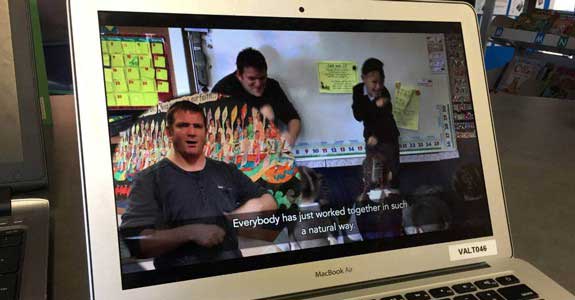
St Theresa’s School sets example for NZSL friendly schools
A Porirua school is being heralded as a great example of inclusive education. St Theresa's School in Plimmerton is the focus of a new short documentary by van Asch Deaf Education Centre, which will be used as a resource to show how to effectively integrate deaf education and culture into schools.
2021
article – Taonga source: NZ Herald.
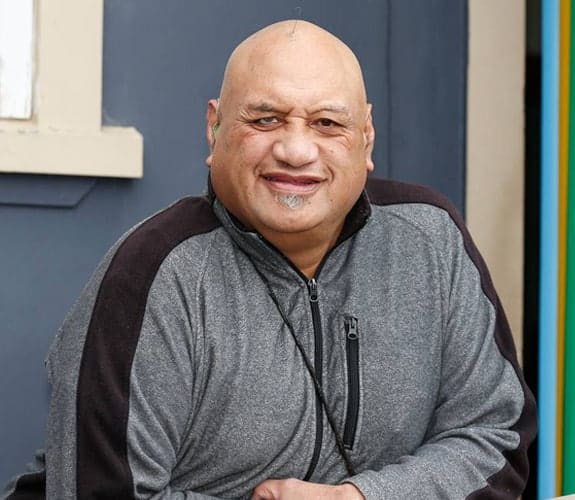
Deaf Northlander Eddie Hokianga urges Māori to turn their hand towards trilingual interpreter roles
Northland sign language tutor Eddie Hokianga has taken up the task of ensuring the region's deaf Māori community is heard. Hokianga (Ngāti Kahungunu, Ngā Puhi, Ngāti Porou) has spent the last three years teaching te reo sign language to help fill a national void of interpreters fluent in the discourse.

1991
article – Taonga source: Unknown
Signs break the ice
Lower Hutt's Myra Sullivan showing hearing people how to use sign language at a workshop for the deaf held at Wellington College of Education yesterday.

2014
publication – Taonga source: Wellington Deaf Society
Absolutely Positively Windy Deaf: September 2014


2018
video – Taonga source: Deaf Children New Zealand
NZSL and Us: Zenos Tamihana, Auckland
Zenos Tamihana comes from a large, loving family that cares deeply about his communication needs. He is a lively, happy young boy who loves sports and attends Kelston Primary School in Auckland. Zenos has a teacher who is Deaf herself and uses NZSL in class. Zenos thrives at home and at school largely thanks to full access to language and communication.

2006
publication – Taonga source: Oticon Foundation
Soundscape: February 2006

1996
video – Taonga source: Television New Zealand Archive
Patrick Thompson discusses upcoming wānanga for Māori Deaf
Patrick Thompson is interviewed on the ‘Marae’ programme, a bilingual Māori and English language current affairs show, about setting up a wānanga to enable Māori Deaf to access te reo Maori and Tikanga Maori.

2004
video – Taonga source: AUT Visual Languages Section
Memories of Ava Buzzard (2004)
Ava Buzzard talks about commuting to school via her father’s motorbike, home signs, signing and oralism, and the next generation of signers.

1989
article – Taonga source: The Dominion
‘Real’ sign language studied
Deaf people have evolved a sophisticated language which is little understood by hearing people and is officially ignored, according to American linguist Marianne Collins-Ahlgren.

2023
article – Taonga source: NZ Herald.
Whaikaha the first ministry with a name in all of NZ’s official languages
Whaikaha – Ministry of Disabled People has become the first and only government ministry with a name in all three of New Zealand’s official languages.

1985
article – Taonga source: NZ Herald
Good sign for the deaf
A course to train professional interpreters for the deaf, now being run in Auckland, is the first of its kind in New Zealand.
NZSL Stories


1997
video – Taonga source: AUT Visual Languages Section
Memories of Perry Strawson
Perry Strawson entertains with stories and funny tales from his life; what it’s like to enjoy sports and travel as a young Deaf man.
NZSL Stories


2006
article – Taonga source: Unknown
NZ sign language becomes official – Capital D for deaf?
The room is full of waving hands and exaggerated facial gestures. Even though the room is silent the dozen women are "talking" with each other just as volubly as if they were having a chinwag. It is a women's only class in New Zealand's latest offical language - NZSL.

2012
publication – Taonga source: St Dominic’s Catholic Deaf Centre
Deaf Southern Star: 2012 (Vol. 34, No. 1)


1992
article – Taonga source: NZ Herald
Treatment of deaf man is modern horror story
The documentary 'The Remand of Ivan Curry (One, Sunday 9.35) was the story of how a man could spend two years in a New Zealand prison without trial. A deaf man arrested for a murder he did not commit who was kept in jail through lack of police investigation then turned back onto the streets with nothing, not even an apology.
NZSL Stories

2013
publication – Taonga source: St Dominic’s Catholic Deaf Centre
Deaf Southern Star: 2013 (Vol. 35, No. 3)

2006
video – Taonga source: Ko Taku Reo, Deaf Education New Zealand
NZSL becomes an official language of New Zealand
On 6th April 2006, members of the Deaf community and supporters gathered on the steps of parliament to celebrate the NZSL Bill passing its Third Reading, becoming the NZSL Act (2006). This marked the end of a long journey to give NZSL official status in Aotearoa New Zealand. This footage was screened on TV3 that evening.


2010
publication – Taonga source: St Dominic’s Catholic Deaf Centre
Deaf Southern Star: 2010 (Vol. 32, No. 3)

1995
video – Taonga source: Television New Zealand Archive
Deaf Blacks’ first ever international match
Holmes’ Jo Malcolm catches up with the Deaf Blacks team at their training in Christchurch in preparation for the first of three upcoming test matches against the visiting Deaf South Africans - the first ever international match for both sides.
NZSL Stories


2016
video – Taonga source: Attitude Pictures
NZSL has become an integral part of Coffee Educators
Not long after opening Co-Ed Cafe and the associated training school, Claire Matheson began running courses for students of Newlands College Deaf Unit. NZSL is now used in meetings and training, and they have menus in sign language.

1997
article – Taonga source: The Evening Post
First NZ sign language dictionary
'Wellington' and 'All Black' are just two of hundreds of familiar Kiwi terms – such as Milo, Weetbix, pakeha, Maori and marae – described in A Dictionary of New Zealand Sign Language to ve released next week.
NZSL Stories