
1946
article – Taonga source: NZ Tablet
Making the Deaf Hear and the Dumb Speak: The Splendid Work of St. Dominic’s School, Wellington.
Two years ago, the New Zealand Dominicians opened a Catholic school for deaf children at 15 Dover Street, Island Bay, Wellington. The article records the impressions of a Wellington journalist who visited the school recently.

2022
article – Taonga source: The Northern Advocate
Northland marae set up te reo and deaf sign programmes to grow national languages
Twenty marae across Northland want to grow the number of whānau who can speak te reo Māori ... in sign language. An eight week course, He Aha, is about to get under way to help whānau improve communication with tangata turi.


2018
video – Taonga source: Deaf Children New Zealand
NZSL and Us: Diamond Johnson, Hamilton
Diamond is a bubbly and active little girl who loves a challenge. Her whānau embraces all three of New Zealand’s languages: English, Te Reo Māori and NZSL. Her mother is determined to improve her NZSL by attending sign language classes so she that she will be able to communicate with Diamond fully as she grows up. Her whānau has a strong commitment to ensure Diamond is exposed to as much NZSL as possible including access to Deaf role models.

1980
article – Taonga source: The Evening Post
Duchess gets magic carpet treatment
What do you do in the deaf unit at Hutt Valley Memorial College when everything is spic and span ready for a Duchess to pay a visit and someone spills a pot of black ink on the carpet?

2004
video – Taonga source: Rūaumoko Komiti
Patrick Thompson’s ‘Te Hēteri’ interview – unedited footage
Unedited footage of Patrick Thompson’s ‘Te Hēteri’ interview at the famed Star Sign Cafe on Auckland’s Dominion Road in 2004.


2005
video – Taonga source: AUT Visual Languages Section
Toa Anga Whati Māori
Māori TV's 'Toa Anga Whati Māori' profiles the Deaf Association of New Zealand on its weekly program, interviewing a series of Deaf people in sports (golf, touch rugby, rugby) before touching upon the job of a Deaf Awareness Officer who delivers training throughout New Zealand.

NZSL Stories


2011
video – Taonga source: Deaf Aotearoa New Zealand
God Defend New Zealand: New Zealand National Anthem in NZSL, Maori & English
In NZSL with subtitles in Māori and English; created in collaboration with native speakers of NZSL, Māori & English, and sign language linguists from the Deaf community, with the purpose to create a NZSL translation that was true to the meaning behind the Māori & English lyrics.


COLLECTIONS – CURATED BY SIGNDNA: DEAF NATIONAL ARCHIVE
Deaf View conferences
The series of national Deaf View conferences have been organised by Deaf people in New Zealand spanning three decades. Each conference has successfully created a platform for better awareness and understanding of Deaf culture and NZSL language; and nurturing links for a stronger Deaf community at a local, national and international level. They also celebrated the rich achievements and diversity of the Deaf community over the past 30 years as well as often pointing the way forwards, for a better resourced and more empowered Deaf community.

1995
publication – Taonga source: National Foundation for Deaf and Hard of Hearing
NFD Communicate: September 1995

NZSL Stories


biography
Profile
Hemi Hema (QSM)
Hemi Hema received the Queen’s Service Medal (Q.S.M) in 2012 for his services to the Māori Deaf community. Along with Karen Pointon in the same year, Hemi was the first Māori Deaf person to receive such an honour.

1997
article – Taonga source: The Evening Post
First NZ sign language dictionary
'Wellington' and 'All Black' are just two of hundreds of familiar Kiwi terms – such as Milo, Weetbix, pakeha, Maori and marae – described in A Dictionary of New Zealand Sign Language to ve released next week.
NZSL Stories

1995
video – Taonga source: Television New Zealand Archive
Michael Wi, Māori Deaf
Michael Wi, is profiled on ‘Marae’, where he shares his experience of growing up as Māori Deaf in a paheka-centric education environment, and learning as an adult about tikanga Māori, and marae protocols.


2002
video – Taonga source: Kevin and Lynette Pivac
Māori & Pacific Island Deaf play against Japan Deaf Rugby XV
TVNZ’s Marae programme features the friendly game between Deaf Māori & Pacific Island Invitational XV and the Japan Deaf Rugby team. It includes the pre-match team talk with coach Richard Peri, karakia from kaumatua Ivan Tamepo, and discussions with assistant Togia Lanefale. It concludes with highlights of the match which was closely fought but finally won by Japan 20-17.


2014
video – Taonga source: Ministry of Education
Ko Wai Au? Who Am I? See My Voice?
A video with six rangatahi communicating their stories of being young Turi Māori (Māori Deaf). The topics they discuss include recognition and acknowledgement of Deaf people in the past, Dame Whina Cooper and the impact of Kelston Deaf Education Centre.
2022
article – Taonga source: The Northern Advocate
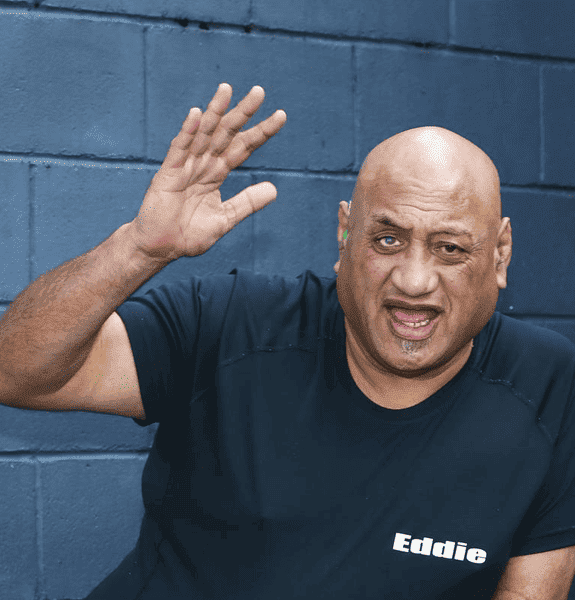
Te Wiki o te Reo Māori – Māori Language Week: Deaf Northlander Eddie Hokianga
Deaf Northlander Eddie Hokianga was on a troubled trajectory in life until he got his hands on te reo and connected with his Māori culture. Hokianga (Ngāti Kahungunu, Ngā Puhi, Ngāti Porou) and Kim Robinson of Deaf Action New Zealand are delivering a groundbreaking initiative in the form of an eight-week course to be held, ideally, across 20 Northland marae.

1959
video – Taonga source: Susan Hamilton
Extended version: Te Pakanga o Whau performs at the opening ceremony of Kelston
The opening of Kelston on a site in Archibald Road featured the infamous ‘Te Pakanga o Whau’ (The Battle of Whau) in 1959 where 86 deaf students acted in an outside play featuring a Māori-Pakeha battle near a big gum tree field.


1993
article – Taonga source: Contact
Hands says it all
Kevin Stokes wishes more people spoke his language. He would also like to see it recognised, as New Zealand's third official language, alng with English and Maori.
NZSL Stories

1994
video – Taonga source: Television New Zealand Archive
NZ gets 8 more NZSL interpreters from the first AIT Diploma class
The first graduates of the Diploma in NZSL Interpreting course will start working in the community, enabling Deaf people to achieve their rights to access a range of settings and services.

1989
article – Taonga source: Wellington Deaf Society
Deaf angry at threat facing News Review
Deaf people are angered and disappointed by the threat facing the TV show News Review.


1997
video – Taonga source: Television New Zealand Archive
Hunga Turi: Māori Deaf have their first accessible stay on a marae
‘Te Karare’ was present to witness members of the Māori Deaf community have their first accessible stay on Kokohinau marae.

2002
Object – Taonga source: Auckland Deaf Society
Pocket Patch: Māori / Pacific Deaf Rugby Invitational XV

NZSL Stories

2006
article – Taonga source: Unknown
Sign of the times
Kirsten, John and Shannon are over the moon at the recognition of New Zealand Sign Language. "It was the best day for the deaf community; it felt awesome to be a part of the process and support it all the way."

2002
video – Taonga source: Dorothy Jones
Amateur footage: Inaugural Deaf Rugby World Championship
A snapshot of the inaugural 2002 Deaf Rugby World Championships held in Auckland, briefly touching on official matches, friendly games, and two social evenings at Auckland Deaf Club, with speeches galore!

NZSL Stories

2004
video – Taonga source: Rūaumoko Komiti
A Day in the Life of Rūaumoko Marae
Insight into the preparations that go into a powhiri onto Rūaumoko Marae, and rare footage of the powhiri itself, followed by an interview with Patrick Thompson.

2003
article – Taonga source: Victoria News, Victoria University of Wellington
NZSL dictionary includes te reo Māori
Deaf New Zealanders now have access to te reo Māori vocabulary in the Online Dictionary of NZSL, compiled by Victoria’s Deaf Studies Research Unit.

1959
video – Taonga source: Auckland Deaf Society
Te Pakanga O Whau – The Battle of Whau: Drama by Kelston School for the Deaf
The Battle of Whau: a drama by Kelston Deaf students for the opening ceremony of Kelston School for the Deaf, 7th November 1959.

2004
video – Taonga source: Rūaumoko Komiti
The Māori Deaf world: Interviews with Whiti Ronaki, Stephanie Awheto and Michael Wi
This raw, edited footage consists of interviews with Whiti Ronaki, Michael Wi and Stephanie Awheto - a trilingual interpreter, on topics relevant in the Māori Deaf world.

1996
video – Taonga source: Television New Zealand Archive
Deaf Awareness Week 1996
Deaf Awareness Week 1996 begins, with a spotlight on Des Barton, who finds the latest technology in hearing aids a great improvement. Angela Sew Hoy highlights that the week is aiming to raise awareness about Deaf people, their language and culture.

1996
video – Taonga source: Television New Zealand Archive
Patrick Thompson discusses upcoming wānanga for Māori Deaf
Patrick Thompson is interviewed on the ‘Marae’ programme, a bilingual Māori and English language current affairs show, about setting up a wānanga to enable Māori Deaf to access te reo Maori and Tikanga Maori.
2021
article – Taonga source: NZ Herald.
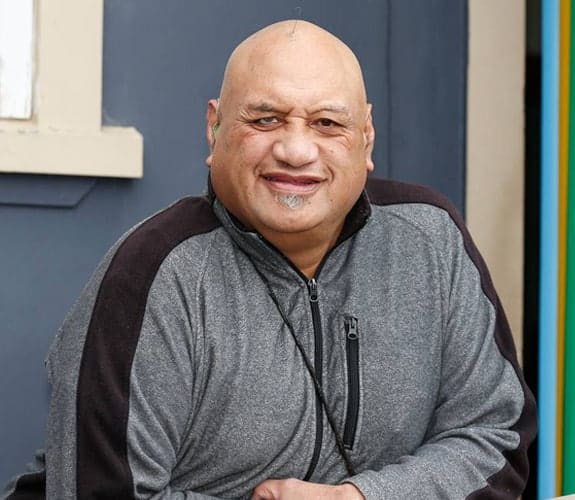
Deaf Northlander Eddie Hokianga urges Māori to turn their hand towards trilingual interpreter roles
Northland sign language tutor Eddie Hokianga has taken up the task of ensuring the region's deaf Māori community is heard. Hokianga (Ngāti Kahungunu, Ngā Puhi, Ngāti Porou) has spent the last three years teaching te reo sign language to help fill a national void of interpreters fluent in the discourse.