Opening of the Bruce McHattie House

1990
  • Deaf Organisations
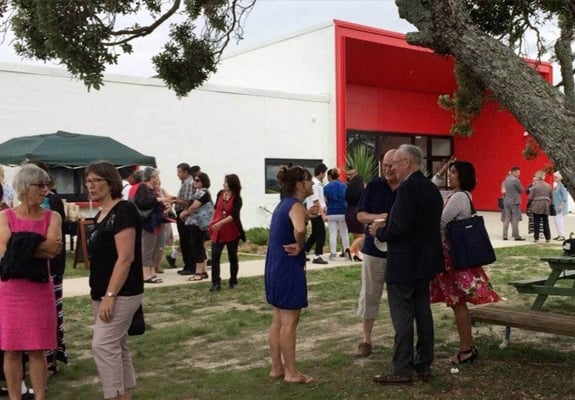
The ceremony and speeches to open McHattie House, used as the national office for NZAD.
HomeVideosOpening of the Bruce McHattie House

From ‘Talking Hands, Listening Eyes’ – Bruce McHattie left most of his estate to the New Zealand Association for the Deaf, and the Executive and Council agreed to use the legacy to buy a house for the national office. Since 1985 Ken Jillings, the first paid Services Co-ordinator, in charge of the NZAD Field Office operation, had been managing the operation, administration and finances of the NZAD from his ‘office’, a very small room in a little old house round the side of the Auckland Deaf Society hall.

Hilary McCormack found a suitable house in Glen Eden (26 Glendale Road, Glen Eden). The McHattie House was opened by Sir Paul Reeves, the Governor-General and Patron of the NZAD, on 9 May 1990 at 2pm. The ceremony was almost a memorial service for Bruce McHattie, with many tributes to the man and his work. Ken Jillings moved into the big office, and the other office was used for the national Services Co-ordinator. And, for the first time, there was ‘office staff’ – Maureen Seth as Receptionist and Information Officer.

NZSL story – Taonga source: Tony Walton

From New Lynn to Avondale: A Necessary Move

Tony served as President of the New Zealand Association of the Deaf from 1999 to 2003. At the time, the focus was on supporting Deaf youth – not relocating. But when asbestos was discovered in the ceiling of the New Lynn building, with removal costs estimated at $600,000, a major decision had to be made. With support from a funder willing to underwrite the risk, the building was sold and a new location was secured. The Avondale office officially opened in November 1999.
NZSL story – Taonga source: Tony Walton

Tony Walton on Building a More Accessible Deaf Aotearoa

Tony reflects on his involvement with the New Zealand Association of the Deaf (now Deaf Aotearoa). In 1989, during the World Deaf Games, New Zealand had only two or three qualified NZSL interpreters – a serious shortage. NZDSA was strongly sign-based, while the NZAD board leaned more oral. After the Games, Tony joined NZAD as a delegate to learn how it worked, eventually becoming President. His focus was on Deaf youth, leading to the creation of Friends of Young Deaf (FYD), better Māori engagement and involvement with more NZSL interpreters. One key goal was to have 13 interpreters nationwide, giving every major town and city access. Interpreter pay and access were limited back then – very different from today.
Taonga source:
Deaf Aotearoa
Original format:
VHS
Reference number:
SignDNA – Deaf National Archive New Zealand, DA11-01-DOC90
Note:
This item has been compressed and/or edited.