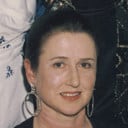
Deaf worker soon calms the nerves
Wellington has a new worker among the deaf, Pat Dugdale, profoundly deaf since the age of nine, has become field officer by the New Zealand Association of the Deaf.
Her job is to provide personal social service help for the deaf and hearing impaired and to liaise with organisations, welfare agencies, commercial institutions and law, lawyers on behalf of the deaf.
Using a speech written by Mrs Dugdale and through interviewing her, reporter Mary Macpherson gained some insight into her job and what it is like for a deaf person working in a hearing world.
She also learned of an important project Mrs Dugdale is promoting — accommodation for young deaf people.
This is the first of a two-part series she writes about Mrs Dugdale and her job.
...
I’d never interviewed a completely deaf person with speech difficulties before.
Apprehensive about misunderstandings I asked another hearing person — Don Manning, field officer co-ordinator for the New Zealand Association of the Deaf — to be present.
Surprise.
As I enter the small office there sits an elegant, well-groomed woman, coppery hair in a French roll, with a youthful face.
Married with three children aged 23, 22 and 19, Pat has a bachelor of arts honours degree in English from Manchester University and until now has “just had office jobs”.
This job, seven weeks old, covering the Wellington Hospital Board area for the deaf association is the first “satisfying” job she has had.
Pat says it is difficult for a deaf person to get a position of authority.
She says normal people don’t like having deaf people in charge of them.
Confusion
To do this job she has had to overcome her feelings about being disabled “because I am acting for people worse off than I am”.
Our interview starts in some confusion I feel drops of sweat forming and trickling as I try to work out my position between Pat, Don Manning, note taking, lip reading, listening and sign language.
But then we establish some ground rules and things work better.
I’m told I should make my questions shorter and simpler – no complex sentences, no ums, – because one of the effects of deafness is that communication becomes straightforward.
“There’s no time to muck around,” says Don Manning.
I find I can understand Pat’s speech quite well if I look at her as she speaks. This means I can’t take notes as she talks so there are pauses after she has spoken while I scribble things down.
I relax as I realise that between lipreading, listening to Pat, written questions and answers and sign language help from Don Manning for complex ideas, my questions are being understood and answered – in fact accurately and with admirable clarity.
Pat says “because I cannot hear at all, and have not heard my own or any voice for so many years (she became deaf at the age of nine aft4er meningitis) I don’t speak very well.”
“On the other hand, I’m supposed to be a very good lip reader. But lip reading is a rubber crutch; you never know when it will bend and send you sprawling.
“The question is, then, can I do the hearing world side of the field officer’s job, with difficult speech and the unreliability of lip reading.
“I feared that I could not – in practice I find that I can.”
At the Department of Labour she is usually in a one-to-one situation with a sympathetic person who might have prior knowledge of what she is talking about.
This makes dealing with the hearing world easier than expected.
There is the occasional rough ride, impatience and lack of understanding, but Pat says that is what “I’m paid to put up with.”
She risks embarrassment to save her client clients from worse, “and some of them have suffered so much in their dealings with hearing people that they will put up with any difficulty or deprivation rather than go through that ordeal again,” she says.
Mostly there is understanding for Pat but there are instances like a receptionist in a government department who on receiving in writing the name of a person wanted to see, told her to go and sit down.
After 10 minutes waiting Pat inquired again and was told the person did not work there.
“That’s the thing. People think I’m unemployed or on social welfare. They don’t think a deaf person can be a professional,” she says.
“She – the receptionist – was knitting. One of these knitting people,” Pat says with a grin.
She suggests that people objecting to field officers being deaf are worried most about the unease and dismay of some hearing people when confronted with someone like herself or worse.
“I don’t think it merits much consideration.
“At least I tell myself that if hearing people are embarrassed by having to talk to me, that is their problem and the result of their own shortcomings, not mine.
“And if officials have their official nose rubbed in the unpleasantness of being forced to struggle with a real communication problem, that is another bonus from having a deaf, not a hearing person, speaking to the hearing world for the deaf.”
It’s an effective way of bringing the daily difficulties of the deaf to official attention.
At first everything in the job frightened Pat but now she is feeling tougher and better about it “because I have managed”.
Priority
The other thing she tells herself is that deaf association, in choosing field officers, gave priority to the needs of the profoundly deaf.
In their view the most important thing is that officers should have the ability to communicate easily with the deaf, especially with those unable to read or write.
Pat has that ability and also a knowledge of what it is like to be deaf.
Hearing people can learn to sign, and often those with deaf parents could sign as fluently as the deaf, but that is not quite enough, she says.
Being deaf is an experience perhaps impossible to imagine by even the most sympathetic and intelligent of hearing people on the deaf scene, she says.
Pat’s job, to give personal social service help to the deaf and hearing-impaired and to liaise with the hearing world for the deaf, takes her into contact with the Labour and Social Welfare departments, lawyers and parents of deaf people.
In future she may work with police and the courts.
Pat also works with deaf parents who cannot get on with their deaf children. If the parents have someone to talk to they feel that they have some support, she says.
Her priority is always the needs of the deaf person.
Photo caption: PAT DUGDALE, Wellington’s field officer for the deaf… “If hearing people are embarrassed by having to talk to me, that is their problem and the result of their shortcomings, not mine.”
- Deaf Organisations
- TV/Media