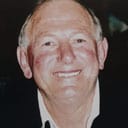
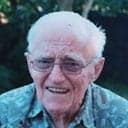
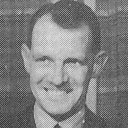
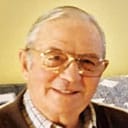
“This is a great day for teachers of the deaf in New Zealand. It’s hard work teaching deaf children and often we feel like giving up, but this sort of thing makes us feel like working all the harder.”
Mr A. J. Young, principal of the School for the Deaf, Kelston, said this in a speech of farewell to the team of 17 deaf athletes before they left to represent New Zealand at the tenth International Games for the Deaf at Washington D.C.
Mr Young said that there is now something for deaf children to aim at and it is gratifying to know that this team of totally deaf people is able to travel all over the world, making all the arrangements necessary and without the need of a hearing person to go with them
This is the first time New Zealand has been represented at the International Games for the Deaf which usually follows the Olympics by a year. The first Deaf Games were held in Paris in 1924 with eight nations participating – this year there are 32 nations taking part with more than 1000 athletes.
New Zealanders entered for athletics, table tennis, indoor basketball, swimming and wrestling events and are accompanied by team manager S.E.M Smithj and his wife Mrs Kath Smith, who is chaperone.
The games are run to Olympic rules and all officials are deaf. The team will also attend the world conference of the Comité des Internationale Sports Silencieux which will be conducted wholly in mime and gesture – lip reading and fingerspelling would be useless because of different nationalities.
New Zealand’s team has been selected by the New Zealand Deaf Amateur Sports Association and team members are from all over the country. The lone female is Rossell Mackenzie of Christchurch, who is to swim the 100 metres and 400 metres freestyle.
Twenty-four year old Rossell learnt to swim at Sumner Deaf School when she was about five and has completed in open company in the Canterbury championships for a number of years. She is a good surf swimmer and a member of the six-man South Brighton Ladies’ Resue and Resuscitation team which holds the New Zealand Championship for six-place rescue and resuscitation.
Rossell works on a mechanical book-keeping centre machine at the office of the North Canterbury Power Board. It was her mother’s job, then Rossell took over and now, so that Rossell can travel with the team, Mrs MacKenzie has gone back to hold the job for her.
Rossell’s coach is Mr Jack Breward of Christchurch.
There are obvious complications attached to competition in sport by deaf people – not least of these being the problems of starting guns, referees’ whistles and other necessary signals. Mr Smith said that lights are used to indicate time and that if a whistle is blown very loudly, many of the athletes can hear it through vibration.
The starter for the swimming events stands in front of the contestants rather than behind, so they are able to watch his fingers on the trigger of the gun.
Times for deaf athletes are considerably slower than for hearing people – the mile record, for instance, stands at 4 min 26 sec – and they reach their peak of performance older than do hearing people. The average age of New Zealand’s deaf team is 30.
Mr Smith, the team’s manager, has been deaf since an attack of meningitis when he was eight years old and his wife was three when she lost her hearing through “flu”. Some team members have been deaf since birth, others had only a few years or a few months of hearing.
Mr Smith, despite his lack of hearing, has worked his way up to become mailroom supervisor at the Chief Post Office, Auckland. He lip reads extremely well and is a champion indoor bowler.
He holds one New Zealand, one North Island and five Auckland championships and Mrs Smith holds one New Zealand, two North Island and seven Auckland championships. This is, of course, in competition with hearing people.
“We would have been at the New Zealand championships at Rotorua too, but for managing this team,” said Mr Smith.
He said that New Zealand leads the world in oral speech training for deaf people. He does know sign language (or fingerspelling) but it is never used here.
To send the team away, the New Zealand Deaf Amateur Sports Association raised £8700. Of this £2000 was a Golden Kiwi grant but raising the rest was hard work. Head of the organising committee Mr Bruce McHattie, said it was a struggle right up to the day before the team left.
Mr McHattie has been organiser, travel manager, publicity manager and finance manager for the team. Until a month ago, there was also a hearing President, but he had to leave for overseas. The rest of the officials are deaf.
Mr McHattie’s parents are both deaf and because of this he has always been active in work for deaf people. He is a member of both the Friends of the Deaf Committee and the Auckland Deaf Society.
The athletes trained hard before they left. Normal Norris of Auckland was coached by his namesake Dave Norris, Olympic sprinter and jumper. They are not related. Wrestler John McRae trained with fellow deaf wrestler Jim Cheyne from Napier, who was in Auckland as masseur to the team.
Regardless of the results of the Games, these sportsmen have taken a big step forward in the continued advancement of the deaf in New Zealand. They have opened up the way for further teams in the future and shown their deaf fellow countrymen that there are challenges a-plenty in fields that have, until now, been closed to deaf people.