HomeArticlesN.Z. wrestler wins 2 medals

N.Z. wrestler wins 2 medals

Auckland welterweight wrestler John McRae captured a silver medal in the freestyle class and a bronze in the Greco-Roman during the Olympic Games for the Deaf in Helsinki.

In the freestyle he missed the title by only one point. His third place in the Greco-Roman was also a particularly fine effort as he had not competed in this style before.

Thirty-one wrestlers from Turkey, Iran, Finland, America, Russia and New Zealand competed in the Games. It was a Russian who beat McRae for the freestyle crown.

Before he left New Zealand McRae received coaching from Aucklander Ray Nola, who competed in this year’s world championships.

McRae was Auckland lightweight champion in 1949 and 1950. In 1949 he was runner-up in the national championships and won the award for the most scientific wrestler in 1952.

He won the Auckland welterweight title in 1952, 1954, 1955, 1956 and 1960. He was nominated for the Vancouver Empire Games but missed selection.

  • Deaf Sports
  • TV/Media
NZSL story – Taonga source: Milton Reedy

Inspired by Robert Algie: Milton’s Wrestling Journey

Milton, who competed in four Deaflympics, credits Robert Algie as a major influence on his wrestling career. He was inspired after watching Robert win two silver medals in freestyle and Greco-Roman at the 1981 World Deaf Games. Milton began training in Auckland but only started competing after moving to Australia. He fondly recalls crossing paths with Robert at a 1985 competition in Melbourne, and watching his rise to the 1986 Commonwealth Games and qualification for the 1988 Seoul Olympics, which he sadly had to withdraw from after a cancer diagnosis. Milton later visited Robert’s grave in Featherston and remains grateful for the inspiration that shaped his sporting journey.
NZSL story – Taonga source: Milton Reedy

Four Deaflympics: From Judo to Wrestling to Sumo

Milton competed in four Deaflympics before retiring at age 48. His first was in 1989, but he represented Australia instead of New Zealand. He was ineligible to play for NZ under a rule that required six months of residency. Though disappointed, he went on to win gold in the 90 to 100 kg wrestling division. His background in judo helped him succeed. Toward the end of his career, he also gave sumo a go and earned a bronze medal.
Taonga source:
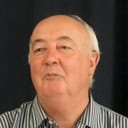
John McRae
Reference number:
SignDNA – Deaf National Archive New Zealand, A1961-001
Note:
This item has been transcribed and/or OCR post-corrected. It also has been compressed and/or edited.