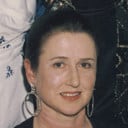
There is still much lack of understanding among the general public about the needs of deaf people, says Pat Dugdale, field officer in Wellington for the New Zealand Association of the Deaf.
Mrs Dugdale is an expert on the subject, as she is herself profoundly deaf, as a result of meningitis when she was nine years old.
This is Deaf Awareness Week, in which an all out effort is being made by a number of organisations dedicated to helping deaf people, to make the public more aware of the difficulties they face.
Other organisations involved in the publicity and promotion of Deaf Awareness Week are the Wellington Association for Deaf Children, the Hearing Association, the Wellington Deaf Society and the Friends of the Deaf.
Displays have been set up in libraries and shops, a mobile aids van belonging to the Co-ordinating Council for the Disabled will contain a display, a church service was held at Old St Paul’s last Sunday with the service translated into sign language, and talks are being given to school children.
A group called “The Sign Singers” from Auckland will perform at the Foundation for the Blind’s headquarters in Hankey Street on Saturday at 5.30pm and at BATS theatre on Sunday at 2.30pm. The group of four have only one hearing member; the music is played on a tape recorder and the group signs the words. The Saturday evening performance, which will include drinks and nibbles, will cost $4.00 and the Sunday afternoon concert, aimed mainly at children, will cost 50c or $1.00 for a family.
Mrs Dugdale is a graduate of Manchester University, having received an Honours degree in English, and has been in her present job for three years.
Among the ways she is able to assist deaf people as a social worker, is in helping them to get and keep jobs, and offering advice on difficult subjects like medical treatment available, marriage guidance, and other problems for which they may not know what help is available.
It has been estimated that 16 per cent of the population have some degree of deafness, and of these, 2 per cent are severely and profoundly deaf.
Mrs Dugdale is working towards the stated priorities of the New Zealand Association for the Deaf which are the establishment of field officers (already achieved), an interpreter service for deaf people, a review of deaf education, public relations and a special psychiatric service.
Mrs Dugdale is working now on the establishment of an interpreter service, similar to one already set up in America, Sweden and England. Interpreters are paid to do the job of translating for deaf people in difficult situations when even excellent lipreaders can benefit from help.
Dealings with the police and courts is one instance Mrs Dugdale quotes, when to be fairly treated like the rest of the population, a deaf person needs someone to let him know what is happening, and in turn relay his side of the story.
One of the ways in which communication has been helped for the deaf in New Zealand is the introduction in the last four years of Phonetype machines which enable the deaf to use a telephone, providing the person they are talking to also has a machine. The cost of one of these aids, with a printer, is $450. This is half the actual cost of the machine, but funds raised in the 1981 Telethon subsidise the other half of the cost.
Mrs Dugdale’s assistant field officer is Ruth Pemberton, who has normal hearing, and assists with telephone calls and as an intermediary. Expenses of the field office are partly funded by a grant from the Department of Social Welfare.
Pat Dugdale has some words of advice to anyone who is to try to communicate with a severely deaf person: keep what you say simple and to the point; look at the deaf person when you speak; speak clearly but don’t shout; never speak to a deaf person with something in your mouth; try to avoid abstract ideas in conversation.
Anyone who would like further information about help available to people with any degree of deafness should ring the association, phone 736-921.