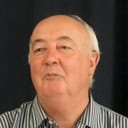
A course to train professional interpreters for the deaf, now being run in Auckland, is the first of its kind in New Zealand.
The Association for the Deaf has organised the four-and-a-half-month course at the Auckland Teachers’ Training College and will offer two full-time positions once the course has finished.
American interpreter Dan Levitt will teach the 10 students lip-reading and sign language, professional ethics, and interpreting for the deaf in employment or for medical or legal purposes.
TestsThey will receive a certificate at the end of the course after a series of tests, one of the more rigorous being a session where students will have to interpret in sign language at the same speed as a speaker.
Mr Levitt hopes that graduates from the Auckland course will be paid for their work on a professional basis.
Interpreters for the deaf in the United States earn up to $25 an hour.
If an interpreter is needed in court, Mr Levitt says, it is the judicial system which pays.
He says there is a desperate need for trained interpreters in this country.
In Los Angeles, where he is the senior interpreter at California State University, professional interpreters are available for a large number of deaf people.
At the university, 70 interpreters and 40 trained note-takers help 200 deaf students.
“We interpret for students in subjects from geology to nuclear physics,” he says.
The university also offers a bachelor of arts degree in deaf studies which partly accounts for the large number of interpreters.
Mainly Women
Churches
Los Angeles has become a centre for deaf people and a mecca for deaf migrants.
There are clubs for the deaf; the deaf worship in churches and at a synagogue, where special sign language services are held; deaf travel agencies cater for deaf tourists; and young women who are deaf compete in an annual beauty pageant.
“In any group of people there is probably someone who knows sign language,” Mr Levitt says.
“You cannot have an intimate conversation in a restaurant any more!”