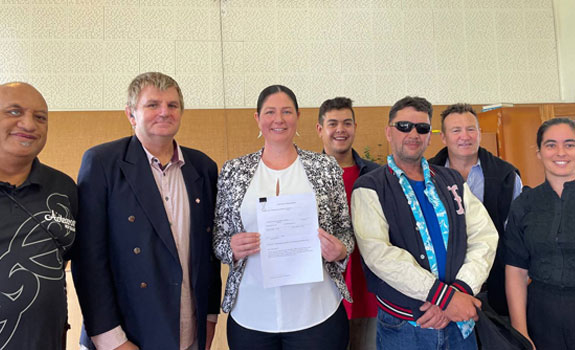
The 600 deaf people in Wellington at last have their own sign interpreter.
Rachel Locker, right, was appointed as a sign language interpreter for the deaf, on Monday.
Based in the Wellington field office of the New Zealand Association for the Deaf, Miss Locker sees her role as opening up opportunities for the deaf.
“They will be able to speak for themselves,” she said.
Recently she attended a union meeting with a deaf person who said for the first time they had been able to understand what was going on.
She will also work with the police, a group the deaf have had problems with in the past.
The police could assume they are drunk and disorderly because of their speech, she said.
Many people assumed the deaf could lipread, said Miss Locker.
But even the best lip readers understood only as much as half of a conversation, she said.
In spite of this, sign language was banned in schools for the deaf until five years ago. Then the children began learning the Australasian sign language. It was a complete language, invented by hearing people and based on English.
This language had never been observed and recorded until a pioneer sign language course was set up in Auckland this year.
The eight sign language students spent part of the four month course videotaping deaf people signing.
But on graduation in September only three of them got jobs. The New Zealand Deaf Association would like to employ more but hasn’t got the funds, said Miss Locker.
In New Zealand, there are 7000 deaf people and three sign interpreters. But the Auckland course tutor, Mr Dan Levitt, was one of 70 interpreters for 250 deaf students and staff at California State University.
This generation of New Zealand deaf children would be ready for university education, Miss Locker said. Because of sign language they were literate, unlike many deaf adults.
“If adults want further education they now have a chance,” she said, because she was willing to attend classes with them and interpret.
Miss Locker hopes that hospitals, the police welfare, justice and labour departments will ask for the service.
She wants deaf people to seek help if they wish to see their lawyer or accountant, negotiate employment or simply make a phone call.
“And as demand increases we hope Government will recognise the value of the service and provide funds for further interpreters,” Miss Locker said.