Marae for the deaf
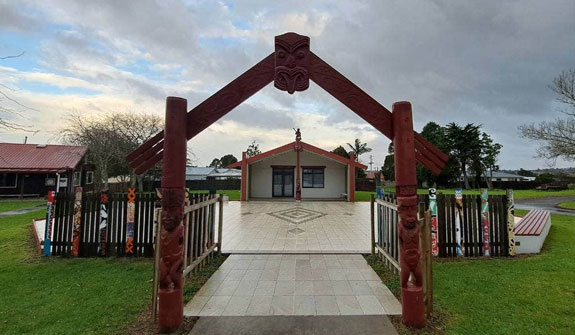
A marae with a difference will open tomorrow in Kelston – it is for deaf children.
Pupils of the Kelston Deaf Education Centre will be able to learn more about Maori culture and marae protocol.
“Deaf people miss out on Maori. When they go on to a marae they are too scared to ask what to do,” says Mr Carl Ross, Maori tutor at the centre.
“My job is to bridge the gap between hearing Maori and the deaf Maori. These kids feel left out.”
He says Maori culture is based on speaking skills. “Everything focuses on oratory skill, it gives you your status, but it leaves the deaf out.”
Mr Ross is working on a sign language which the children can use even though some can speak Maori.
Mr Ross says the deaf children have a deeper feeling for the culture and its spirituality, compared with hearing children.
“It’s the first time Maori has been put into the curriculum for a deaf school and the response has been brilliant.”
The marae is in a converted classroom which all the children have helped to decorate. The junior school have made a sea mural on one wall and the senior school have completed traditional Maori artwork and helped with some of the carvings.
A special feature of the marae is the tane mahuta tree which the children have built.
The marae is called Ruamoko which means unborn child and god of earthquakes. “This is how they (deaf children) feel; they are unborn, into the world of Maori,” says Mr Ross.
Photo caption: Mr Ross standing next to Tane Mahuta with pupils (from left) Rose Palu, Murray Speers and Reece Edge.
- Deaf Education
- Turi Māori
- TV/Media