
2016
publication – Taonga source: Oticon Foundation
Soundscape: March 2016


2016
article – Taonga source: Stuff
Deaf Auckland University student left alone during fire drill
A deaf student has been left feeling hurt after he was cast aside and forgotten about following a fire drill in a university building. Had it been a proper fire emergency, he would have been in serious danger, he said and wanted to see strobe light alarms installed.


1997
article – Taonga source: NZ Herald
Art of surviving in silence
An interview with Abbie Twiss on World Deaf Awareness Day, and the start of New Zealand's National Deaf Awareness Week. Here, Abbie looks out from her Elam studio. "My thoughts go much faster than I can write."

1980s
Object – Taonga source: Wellington Deaf Society
SSI-240 Teletypewriter (TTY)


1968
article – Taonga source: Patreena Bryan
A life few people know
Few people with normal hearing stop to consider the daily frustrations faced by the deaf.


1982
article – Taonga source: Wellington Deaf Society
Teletext helps hard of hearing
Television New Zealand has begun experimental transmission aimed at introducing a new service which will improve viewing enjoyment for the hard of hearing. Called Teletext, it is intended for daily transmission by next year.

1995
video – Taonga source: Television New Zealand Archive
A behind-the-scenes look at the Teletext system
During 'Deafness Awareness Week' in 1995, One Network News runs a news clip that highlights why Teletext is invaluable to the Deaf community. Patreena Bryan shares with us how captions give Deaf people equality.


1981
article – Taonga source: Wellington Deaf Society
Able to talk
For the first time in their lives, Pam and Kay, who are profoundly deaf, can talk to each other by telephone. The Combined Societies for the Deaf is hoping to get telephone-type equipment in airports, police stations, taxi offices and emergency service switchboards.

1980
article – Taonga source: The Evening Post
Good news for Deaf viewers
A weekly news programme for the deaf will be transmitted on Two from February 28, 1980.

1991
article – Taonga source: NZ Herald
The sounds of silence
Turn the light on, so I can hear what you're saying. It's an old line, but a favourite one among us hearing-impaired people, because it points up how we "hear" with our eyes as surely as blind people "see" with their fingers or their ears.
NZSL Stories


2010
video – Taonga source: Attitude Pictures
The Berry Family: Part 2
We take you into the home of the Berrys and look at the lives of deaf New Zealanders. Playing poker is one of this family’s favourite pastimes!
NZSL Stories


1992
article – Taonga source: Western Leader
Curry case highlights Deaf plight
A television documentary on the plight of a deaf man has spurred the Glen Eden-based New Zealand Association of the Deaf into action. It wants to see the man, wrongly imprisoned for two years, receive compensation for his ordeal.
NZSL Stories

2007
article – Taonga source: Unknown
Deaf people being left on the outer
A shortage of sign language interpreters means as many as 7700 deaf people are struggling to access services in their communities.
NZSL Stories

1973
article – Taonga source: The Evening Post
Telephones For The Deaf Are Opening Up A New World Of Communication
A revolutionary device which opens up a whole new world for those born deaf is now being demonstrated in Wellington. New Zealand is the only second country in the world to adopt the system so far.

1981
article – Taonga source: Wellington Deaf Society
Lip service
The producer of News Review explains the innovations and experimentations they have made in creating the programme, specially designed for the hard of hearing.
2022
article – Taonga source: Stuff
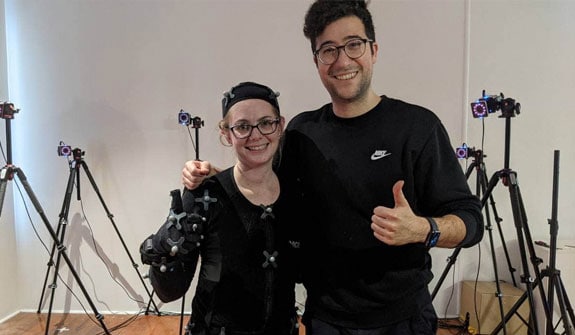
Signing avatar could help Deaf Kiwis order at fast food drive-throughs
Arash Tayebi’s idea to develop sign language avatar technology is personal. And while Kara Technologies is still in the pilot stage, Tayebi hopes the technology will become easier to access as 24/7 teachers or in emergencies.

2003
video – Taonga source: Hilda Tamepo
Memories of John and Laura Hunt
John and Laura discuss their eventful lives, including immigrating to New Zealand, meeting the local Deaf community, and how their meeting led to a marriage which at the time of filming had lasted 56 years!


1985
article – Taonga source: Unknown
Desperate need in N.Z. for interpreters
Qualified interpreters are desperately needed to cope with the needs of deaf people in New Zealand.
NZSL Stories

1989
article – Taonga source: The Press
Clever new system for starting
The starting equipment to be used at the Queen Elizabeth II complex is far more sophisticated. It uses a traffic-light type devised by a Christchurch man, Mr Ted Gilliver.
NZSL Stories


1992
article – Taonga source: Harbour News
Tech course to help the deaf
A significant step for New Zealand's deaf community has been taken this week. The country's first permanent sign language interpreters' course began on Monday at the Auckland Institute of Technology. At present there are only four official interpreters servicing New Zealand's more than 24,000 deaf people. Sixteen students from around the country started the two-year course this week.

1973
Object – Taonga source: Te Papa Tongarewa, Museum of New Zealand
Teletypewriter (TTY) coupler

1988
publication – Taonga source: National Foundation for Deaf and Hard of Hearing
NFD Journal: March 1988 (Vol. 2, No. 1)

NZSL Stories

1989
article – Taonga source: Unknown
Deaf study tour hit by obstacle
Many obstacles, including their deafness, are getting in the way of a planned study to the United States and Britain for Angela and Shelia.

2005
article – Taonga source: Unknown
Sights set on cup – Passage to India a thrill for Kiwis
After having the rug pulled from under them four years ago, the New Zealand deaf cricket team heads to India today for the World Cup.

1993
article – Taonga source: City Voice
Deaf viewers ask for a hand
People who can hear as well as see 'Reasonable Doubts' (TV3, 9.50pm Saturdays) might be surprised to learn that Deaf New Zealanders can understand deaf lawyer Tessa Kaufman’s sign language little better than they can. ASL, used by Deaf actor Marlee Matlin, is a foreign language here. My Deaf friends give it the thumbs up. But the failure of television in New Zealand to provide anything in NZSL is described as “a running sore” by Hilary McCormack.
NZSL Stories

1977
article – Taonga source: Sarah Cameron
Success Story
The smile tells the story of the latest development in hearing aids, as 10-year-old Christoph Blum of Karori communicates with his mother.


1992
article – Taonga source: The Dominion
Needs of deaf people given ‘low’ priority
New Zealand Sign Language must be given official recognition as a language or it will die, Deaf Association President Jennifer Brain says.

2006
article – Taonga source: Unknown
Sign of the times
Kirsten, John and Shannon are over the moon at the recognition of New Zealand Sign Language. "It was the best day for the deaf community; it felt awesome to be a part of the process and support it all the way."

1993
video – Taonga source: Television New Zealand Archive
Sounds or Silence?
In the early 1990s, due to a breakthrough in technology, cochlear implants were starting to become the norm. The Deaf community worldwide viewed cochlear implants as a device that disregarded the need for access to sign language. Others considered such devices a miracle. In 1993, ‘60 Minutes’ investigated this controversial topic in New Zealand.

1973
publication – Taonga source: New Zealand Deaf News
NZ Deaf News: 1973 (Vol. 10, No. 4)
NZSL Stories

