Dream Of Deaf People Is Taking Shape – They Will Build A Hall For Themselves
“Voices singing in praise; sonorous organ music; beautiful passages of the Bible movingly read – these things we cannot hear. We want a church – an interdenominational church – where the service will be given in the silent language we can understand and follow. We want a place too, where deaf people, young and old, can meet together, where they can be trained in lip-reading, in handicrafts and hobbies.”
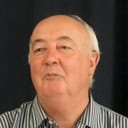
This is the dream of the Auckland Adult Deaf Society, described by the secretary, Mr J. H. Pollard. It is a dream which today is beginning to take real shape. The deaf people held a quiet, but none the less lively meeting last week to discuss a site that is for sale. The president, Mr S. E. N. Smith, made all the details of the plan clear to them. Many deaf from birth were able to read his lips, and the older ones were not so proficient at that, relied on sign language, to follow the discussion.
Several disagreed with the scheme and they argued with many gestures. A point would not be clear to one and his neighbour would explain it. Another would ask a question and the secretary would carefully supply the answer. Soon everyone was in agreement. But before the hall is a reality at last, there will be many such meetings and discussion, many misunderstood gestures and lip-reading errors, many patient explanations.
...
For years their greatest difficulty has been in explaining their requirements to hearing people who would be interested in aiding them. Now, the society has a liaison officer, Mr J. Oxspring and the secretary, Mr Pollard, who was deaf from birth, has recently gained sufficient hearing to be able to use the telephone.
Cruel Jokes
Mr Oxspring said that for many years he did not know that this congenital deafness existed – until his three children were all born deaf. Inquiries led him to the Adult Deaf Society and slowly he gained the confidence of the deaf people he met there.
“It was difficult at times,” he says. “Many had been teased by foolish and cruel jokes as children and adults by their hearing companions that they had become wary. The unscrupulous had taken advantage of their disabilities, the careless were impatient or amused with their efforts to express themselves. Only with their own kind did they feel they could relax. However, now we are friends and even when I correct their pronunciation, they know I am being helpful, not critical.
“The term ‘dumb’ has long been dropped,” he continued. “Deaf people find difficulty in speaking but only because they have not heard the spoken word and cannot learn by mimicry, as hearing children do. Modern methods of teaching those deaf from birth concentrate mainly on speech.”
There are 300 members of the society in Auckland and the surrounding districts. At present they are unable to meet once a week, on Saturday evening, at the Auckland Sunshine Community Centre, in Nelson Street. Some come from as far as Waiuku and Pukekohe. One elderly woman walks four miles to catch a bus to attend once a month.
They come to play cards, billiards, indoor bowls, dance or chat with friends who understand because they too are deaf.
Hopes are that the hall will be built on an acre of ground, giving ample space for the sports-loving members to have a tennis-court and an out-door bowling green. The hall will be used for church services, committee meetings, for showing educational films and for teaching wood, leather and metal work. Every day will have its activities. Most of the deaf work with their hands for occupations where a telephone is used are barred to them. The classes they plan will give them training for a greater variety of jobs.
Badge Would Be Helpful
Films need wording on the screen to entertain or educate the deaf. Arthur Rank, the British film magnate, realising that there are thousands of potential picture-goers in the deaf, is producing films for them. The Auckland society hopes to screen some of these films, and also “Listening Eyes” made by the John Tracy Clinic, in Los Angeles, John Tracy is the congenitally deaf son of film actor Spencer Tracy.
Many who are deaf would like to wear some distinguishing mark. “People speak to us in the street and we don’t answer because we do not hear,” explained one woman. “Whenever you see a white stick you recognise instantly the carrier’s disability. If we had a badge, then strangers would make sure our attention had been attracted and we were looking at them before they spoke to us.”
Few New Zealanders realise that the number of deaf people greatly outnumber the country’s blind. At Sumner and in Auckland there are 310 children attending special schools compared with 60 blind children. When the headmaster of the Titirangi Schol for the Deaf was asked the proportion of Maori and European pupils, he looked surprised and said: “I haven’t a clue – they are all children to me,” And among the deaf themselves nationality, colour and creed means nothing.
The search for deaf children constantly goes on. The society has discovered several who have not been receiving any education at all, and others, who, having partially learned to lip-read, are attending State schools. In ten Rotorua schools, nine deaf children had been found. Their deafness had not been recognised and their doubt and hesitation had been taken as a sign of mental backwardness.
Much of the school curriculum is taken up with speech training and the children miss many subjects that their normal contemporaries take for granted. Television in schools is another hope of the deaf. They would like to see it introduced first to deaf schools in New Zealand.
On leaving school some of the deaf continue their studies at night classes at the technical school in the city, but not all have sufficient confidence in their lip-reading ability. Practising conversations with hearing people in the privacy of their own hall will encourage them to mix with outsiders and will open many doors in schooling and the occupations to them.
Language Mastered
A pretty young girl, who had spoken to me clearly and concisely, said that she had been deaf from birth but had lived among normal people, who spoke continually to her until she mastered the language she cannot hear. New acquaintances are always surprised when she informs them of her disability.
“We thought you a foreigner,” is the usual reply.
Others, too, because of their elusive accent, have been taken for immigrants. However, it is only with the greatest concentration that hearing people can understand some of the members – usually the older ones who were treated as dumb when children.
Mr Tannahill, the society’s oldest member and founder of the Wellington Deaf Society, came from Scotland many years ago. As a child he had been taught only sign language. His command of written English reveals how widely he has read of the best books by the finest authors. Other members of the society are teaching him to lip-read.
A Latvian, Mr Dz Svikers, who has degrees in engineering and qualifications in the arts, is another pupil. He is being taught English and lip-reading. A keen basketball player, Mr Svikers is sports master for the society. At one time he was president of the Latvian Deaf Organisation and a representative of the Latvian Red Cross in Germany.
“I can good speak Latvian and German, but only half English,” explained Mr Svikers. He has been in New Zealand nearly three years.
Drivers’ licences are held by several members. None of them really believed the first man to apply for his licence would gain it. But in triumph he returned and others soon followed suit. Like amputee servicemen who have gained drivers’ licences, the record of the deaf drivers is untarnished, and they are probably among the most careful on the roads.
A Part In Recreation
Deafness is no great impediment in sport. Jim Cheyne, John McRae, Keith Gordon, Owen Gibbons and Tom Gibling are all known in the amateur wrestling and boxing world. Merv and Ray Forman, formerly of Napier, now Auckland representative indoor basketball players, brought the society’s team up from third to A grade standard. Leonard Williams, an older member, recalls the days when he was Soccer “rep” against the Chinese in 1925. And other names of deaf sportsmen and women are familiar to sports-conscious New Zealanders.
Marching, the choice of recreation for many girls today, is also the hobby of Miss R. Mullins, who is a member of the Papakura team. Not hearing the music, whistle or spoken command, Miss Mullin still keeps perfect time. This year she was awarded a special trophy. She said, “I just follow my sister, who is the team leader.”
There are even special Olympic Games for deaf athletes. The first of these festivals was held in Paris in 1924, following the World Olympics of that year. One has followed every Olympiad since then. The next is to be held at Liege, Belgium, in August 1953, under the patronage of the King of Belgium. Athletes from Australia and New Zealand have never competed at these games, and it is unlikely that any will go from here, as all resources and energy must go in erecting buildings for the deaf in the main centres.
Praise For Their Work
Photography, dressmaking, engineering, carpentry, modelling frocks, chicken sexing, all types of factory and manual work are chosen by the deaf. Factory foremen praise unstintingly the work and the concentration of their deaf staff. Employed on a trial basis, the deaf usually find themselves on permanent staff before many weeks. One employer, doubtful of the wisdom of hiring a deaf man on machinery, is convinced that this engineer can detect a fault by vibration before a hearing man can by sound. One deaf engineer runs his own business and employs three hearing men.
Vibration tells the congenitally deaf many thing, Mr Oxspring said that a stamp on the floor will bring his children, even the two-year-old, running from whichever room in the house they happen to be in. Mrs Smith, wife of the president, and like him, also deaf, said that tradesmen known to deaf families will open the back door and stamp on the floor to let them know they are there.
Dancing To Vibrations
So sensitive is the touch of one deaf young man that he can perform intricate dance steps in perfect time by laying his fingers lightly on a radio. At their dances the vibration of the floor keeps the deaf in time.
Lights are another signal. Marking the end of a dance or a break in a Monte Carlo they are turned off for a moment. To attract the attention of a deaf person whose back is turned this signal is also used, although lights are promptly turned on again. “In the dark we are blind as well as deaf,” said a member.
This recalls a remark by the famous Miss Helen Keller, who is both blind and deaf. If she had the choice, she said, she would choose to hear rather than to see. Several of the group disagreed. “I could not bear not to see,” said a young man, “though I can’t hear you, I can see you.” The Auckland Adult Deaf Society members, great admirers of Helen Kellers, were all deeply disappointed that a meeting was not arranged for them when she visited New Zealand.
“When I discovered my children’s disability,” said Mr Oxspring, “I tried to find out what it would like to be completely deaf. Covering my ears was no good; sounds kept penetrating. The sound-proof room at a radio station was the solution. I could not hear my own footsteps. It was a terrible feeling. Now I listen in gratitude to the wind, the crackle at the fire, and the thousands of tiny noises I hear even when I say “Isn’t it quiet tonight?”
Captions (from left to right, top to bottom):
- They have live useful lives in a silent world: Left: Mr J. Howell, a boot trade employee, using an edge trimmer. Middle: Long-service mail sorters in the Post and Telegraph Department at Auckland. From left are Messrs W. Williams (14 years’ service), S. Smith (23 years), J. Peterson (8 years) and L. Williams (35 years). Right: Mr D. Svikers making adjustments to the rollers of a crushing machine at an Auckland flour mill.
- Miss V. Garrett using an electric sewing machine in a foundation-garment factory.
- The Auckland Deaf Society team scoring one of its goals in a keenly-contested basketball match against Whenuapai. The Deaf Society won this game, 18-13.
- Patricia, her brother, Peter, and baby sister, Kay, are all deaf. Their mother takes the opportunity of giving a lip-reading lesson while the children are at play.
- The hard-working secretary, Mr J. Pollard, organising a Saturday night function.
- Deaf Clubs
- Deaf Education
- Deaf Sports
- TV/Media