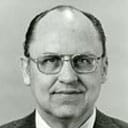
Kiwis were the friendliest people on Earth, the president of the Committee for International Silent Sport, Mr Jerald Jordan, told the opening of the sixteenth World Games for the Deaf on Saturday.
Mr Jordan, who is deaf, signed his speech to the 1400 athletes and officials involved in the Games and to a crowd of about 4000 gathered at Queen Elizabeth II Park for the opening ceremony.
The Games in Christchurch were the first to be held in the Southern Hemisphere, the first in the Pacific and the first summer Games to be held in January, said Mr Jordan.
“Sixty-five years ago a small group of deaf men were determined that the experience of international sports competition should no longer be denied to deaf persons.
...
“The first Games in Paris in 1924 had only nine European nations with 133 participants; today we see about 30 nations and 1400 athletes.”
The Christchurch Games represented a triumph of perseverance by several dedicated people, said Mr Jordan.
“To stage a Games of this scope, with such a small, widely-scattered population of deaf people is very impressive indeed.”
For the organising committee to manage to keep everything together with such unfailing good humour showed that Kiwis were truly the friendliest people on earth, said Mr Jordan.
The president of the Deaf Amateur Sports Association, Mr Anthony Walton, who is also deaf, signed that New Zealand deaf people were extremely proud to host the World Games.
“The Games have always been a place to meet new faces and make new friends. I know that deaf people from around the world will meet New Zealand deaf people and carry this memory close to their hearts.”
The Minister of Health, Mr Caygill, said the Games demonstrated that deafness was no barrier to excellence in sport.
“Sport and friendship mix easily. Sport is a source of competition, of rivalry and of legitimate national pride. It is also a form of endeavour with which everyone can identify,” he said.
In Honour of Morris Coutts: Behind the 1989 World Deaf Games
After the sudden passing of NZDSA President Morris Coutts, Tony Walton stepped up with a 'Deaf can do' attitude and the 1989 World Deaf Games in sharp focus. He recalls the pressure of monthly meetings with the separate host organising committee. Determined to ensure Deaf inclusion, Tony made sure every hearing person was paired with a Deaf counterpart – from Aotearoa or abroad. At the opening ceremony, a balloon tribute honoured Morris and his legacy.
NZSL story – Taonga source: Tony Walton
Winning the Bid: How NZ Secured the World Deaf Games
Tony Walton reflects on Deaf Sports NZ’s early bid to host the World Deaf Games. Their 1981 pitch fell short, with the 1985 Games going to Los Angeles. But in 1985, New Zealand returned stronger. Margaret Coutts and John McRae delivered a more polished signed presentation. Ironically, Australia also submitted a bid, led by another John McRae. To tip the scales, New Zealand hosted a standout evening at the NZ Ambassador’s residence in LA, with food, speeches and swimming. The result? A landslide victory.
NZSL story – Taonga source: Jeff Went
Behind the Scenes: Making the 1989 World Deaf Games Happen
Jeff joined the NZ Deaf Sports Amateur Association in 1986 after a key meeting in New Plymouth with another Auckland delegate. With just three years to go before the 1989 World Games for the Deaf in Christchurch, a strong executive team was needed. Jeff agreed to step back from other commitments and support NZDSA. Tony Walton was appointed to lead the combined Chair and President role. The team met regularly in Christchurch, well before the days of online meetings. Serious funding issues nearly caused cancellation, but Prime Minister David Lange agreed to underwrite the event.
NZSL story – Taonga source: Tony Walton
NZSL or International Sign? Tony’s Opening Ceremony Choice
Tony Walton, President of NZDSA during the 1989 World Deaf Games, reflects on a key decision at the opening ceremony: whether to sign in NZSL or use International Sign. He chose NZSL, trusting the international interpreters to handle the rest. Once the Games were officially declared open, the CISS flag made a dramatic entrance by parachute, passed from hand to hand by past medal winners. CISS President Jerald Jordan was then formally welcomed with a hongi, in true Aotearoa fashion.
NZSL story – Taonga source: Jeff Went
Lasting Legacy: Reflections on the 1989 World Deaf Games in New Zealand
The 1989 World Deaf Games in New Zealand were praised for smooth organisation, great weather, and the chance to enjoy the country’s landscapes and hospitality. Some visitors even found romance! The event helped improve international sign use and left lasting memories. Despite early financial concerns, it ended with a $3,000 profit and didn’t require government support.